
Restraint Reduction & Positive Behaviour Support
Understanding needs. Promoting rights. Reducing restrictions.
Our approach focuses on preventing distress, understanding behaviour as communication and supporting people to live safe, fulfilling lives with choice and control.
What Positive Behaviour Support Means
Positive Behaviour Support (PBS) seeks to understand why behaviours occur, identify unmet needs, strengthen communication and support skills, and improve quality of life. It should be proactive, individualised and informed by the person and those who know them well.
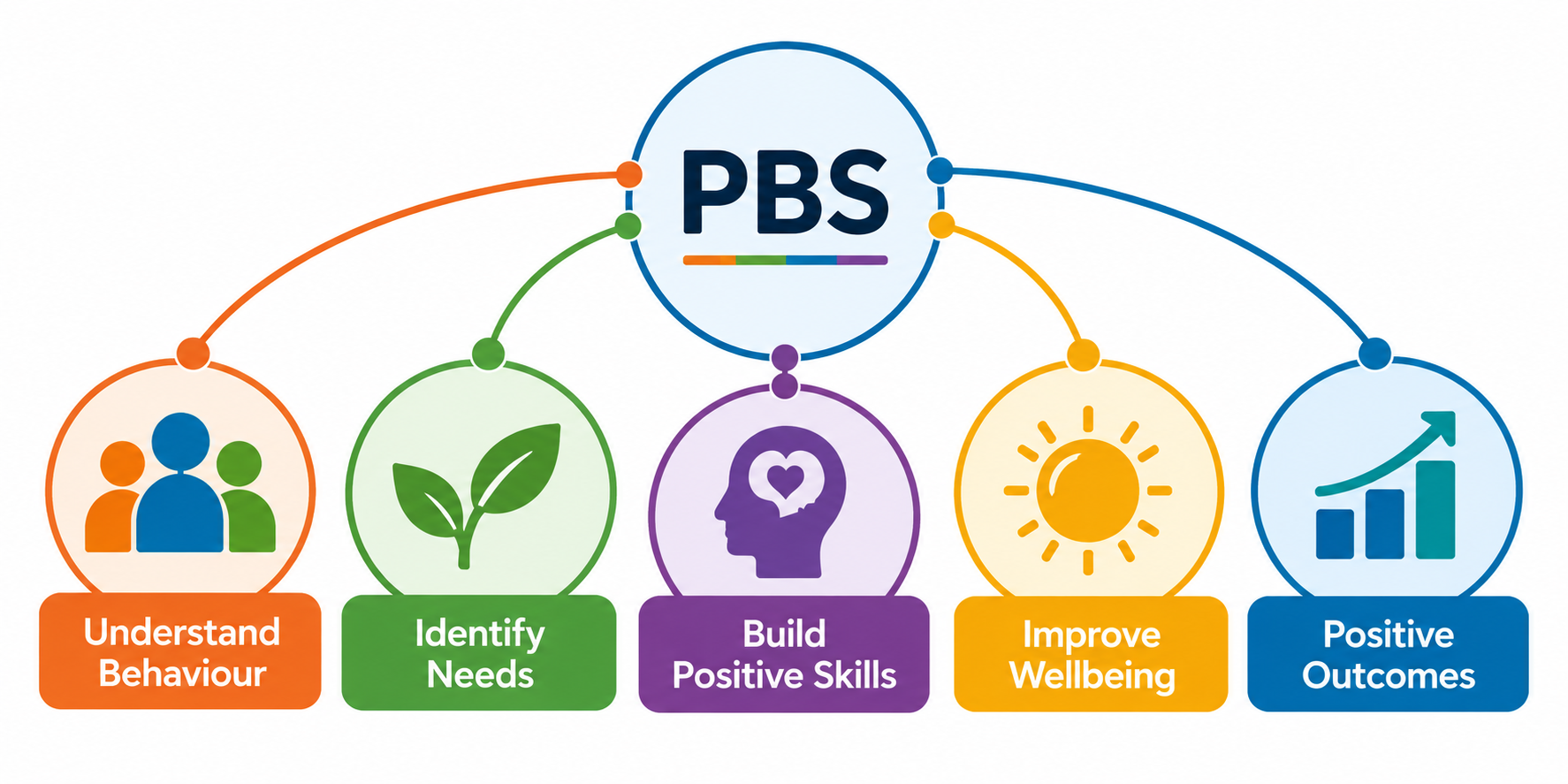
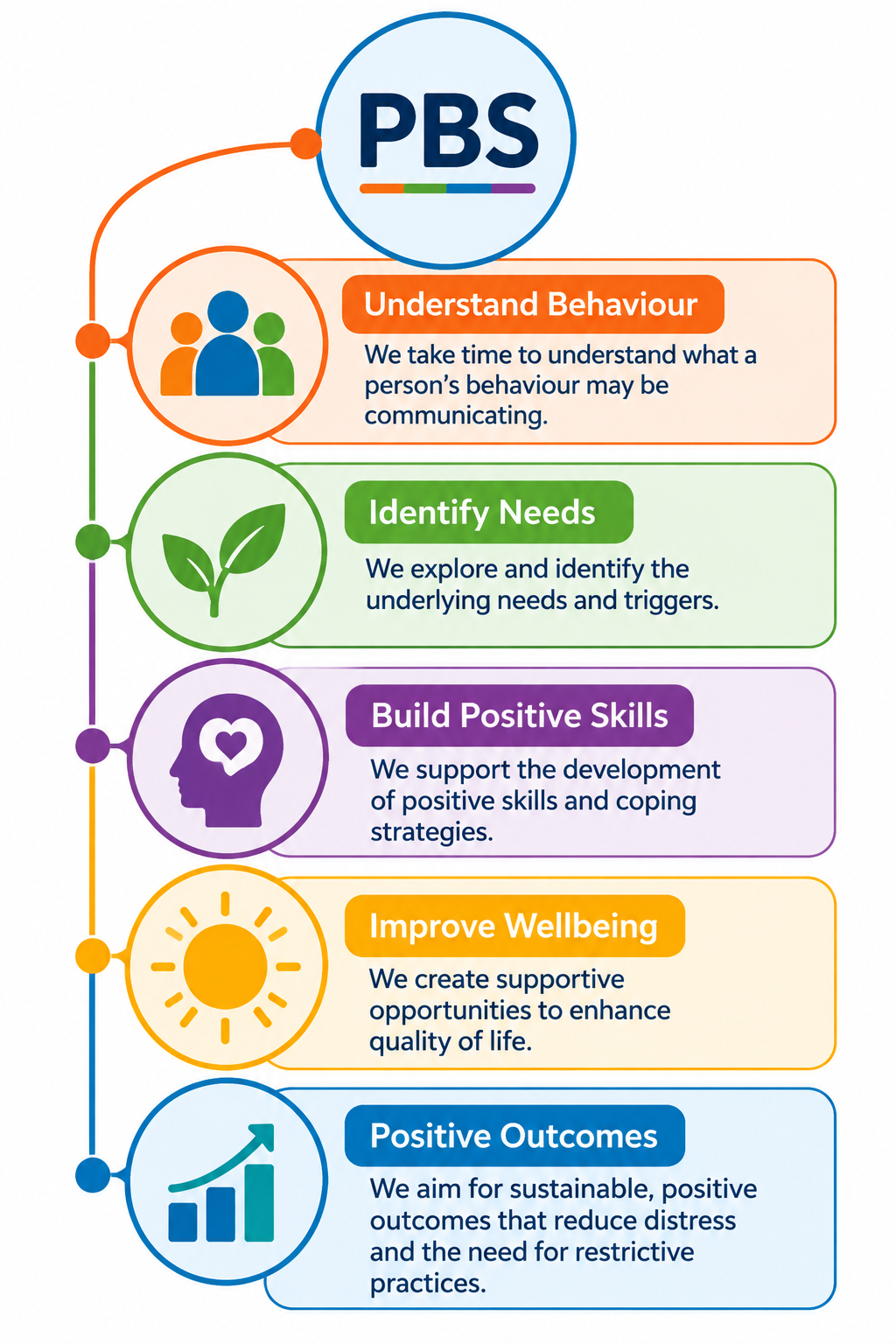
How We Put PBS Into Practice
We aim to reduce the likelihood of crisis through predictable, personalised support, respectful communication and proactive planning. Our approach includes:
- Understanding each person’s communication, needs, preferences and possible sources of distress.
- Developing person-centred PBS strategies, including clear early-warning signs and de-escalation guidance where appropriate.
- Supporting staff to develop PBS knowledge and skills relevant to the people they support.
- Working with people, families, advocates and professionals, according to the person’s wishes and consent.
- Reviewing incidents and restrictive practices to identify learning and reduce avoidable restrictions.
Our Commitment to Least Restrictive Practice
Our aim is for people to feel safe, respected and in control of their lives. We seek to prevent the need for restrictive interventions and never treat restraint as a routine response to distress or behaviour that challenges.
Any restrictive intervention must be lawful, necessary, proportionate, the least restrictive available option and subject to appropriate recording, review and oversight. Support must protect people’s dignity, rights and wellbeing.
We are guided by principles of restraint reduction and positive, person-centred support, with a strong emphasis on prevention, learning and quality of life.
Talk to Us About Individual Support
We welcome conversations about personalised support, positive approaches to behaviour and the steps that help each person live well.